Monad of the Month - SE2569 - West of Fountain's Abbey, Ripon
Welcome to Monad of the Month! This series will feature a monad (1km) grid square within the North and East Yorkshire area where we’re lacking records in our database. We’ve chosen grid squares that lack records but also contain interesting or valuable habitats or (locally or nationally/internationally) designated sites, and that are close to large towns, cities, or transport links where possible, to make them accessible, should you wish to visit and do some recording!
Our Monad of the Month for January 2026 is SE2569, located west of Fountain’s Abbey, and around 6km south-west of Ripon.
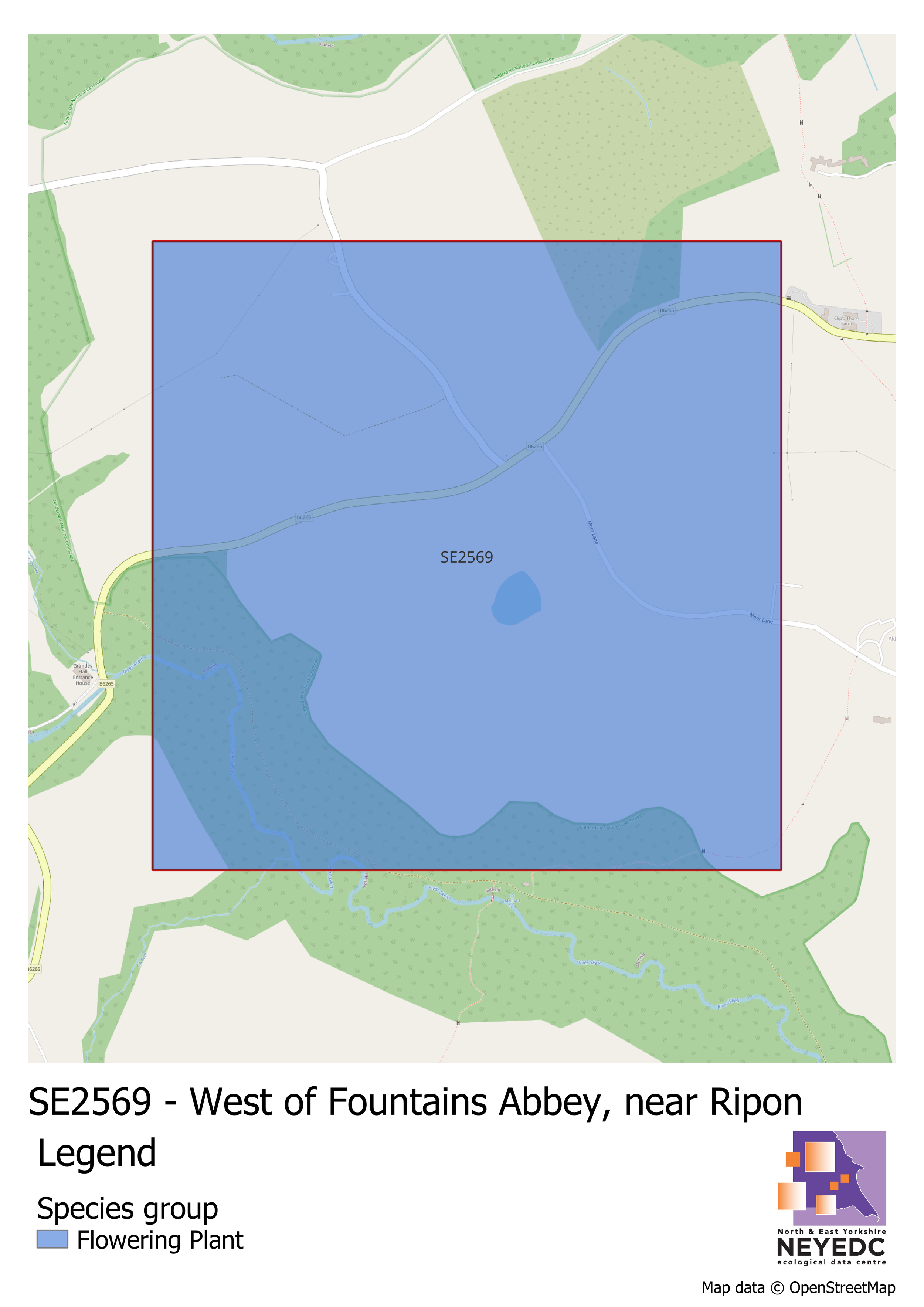
SE2569 is largely arable land, but also contains a large section of Spa Gill Wood, a North Yorkshire SINC site, through which runs a section of the River Skell. The wood is designated for its quality as an ancient, long-standing neutral to calcareous and wet woodland and has public rights of way running throughout, making it publicly accessible for recording. Despite being a SINC site, we only have 1 record in our reporting database from this area, of a flowering plant (note: this does not include species lists compiled during SINC surveys, though this site has not been formally surveyed since 2000). Previous surveys of the site noted extensive and productive management taking place, so the composition of species at the site has potentially changed since this time, making it a good choice for recording.
Please ensure any land you record on is openly accessible or has access granted to you.
Why so few records?
Whilst there are many sources of biological records, including on the likes of NBN Atlas and recording platforms like iRecord, as well as through organisations like BTO or BSBI, it should be noted that LERCs do not always have access to these records for local decision making, or cannot use them due to incorrect licensing, poor resolution, insufficient capacity to deal with a large number of records, or other reasons. This series is intended to highlight areas where we have fewer records, forming gaps in our coverage. If you have records - particularly linked to specific sites or species groups - that we may not have access to, we’d love to hear from you.