Networks for Nature: NEYEDC's 25-year celebration conference
Our celebratory 25-year conference took place this past weekend at the Hospitum, York - ‘Networks for Nature: a conference celebrating 25 years of NEYEDC’. Designed to mark 25 years of NEYEDC and the role of data in driving species recovery across the Yorkshire region, we welcomed speakers from across our network and were joined by attendees from all parts of our sector on the day. Thank you to all who joined us!
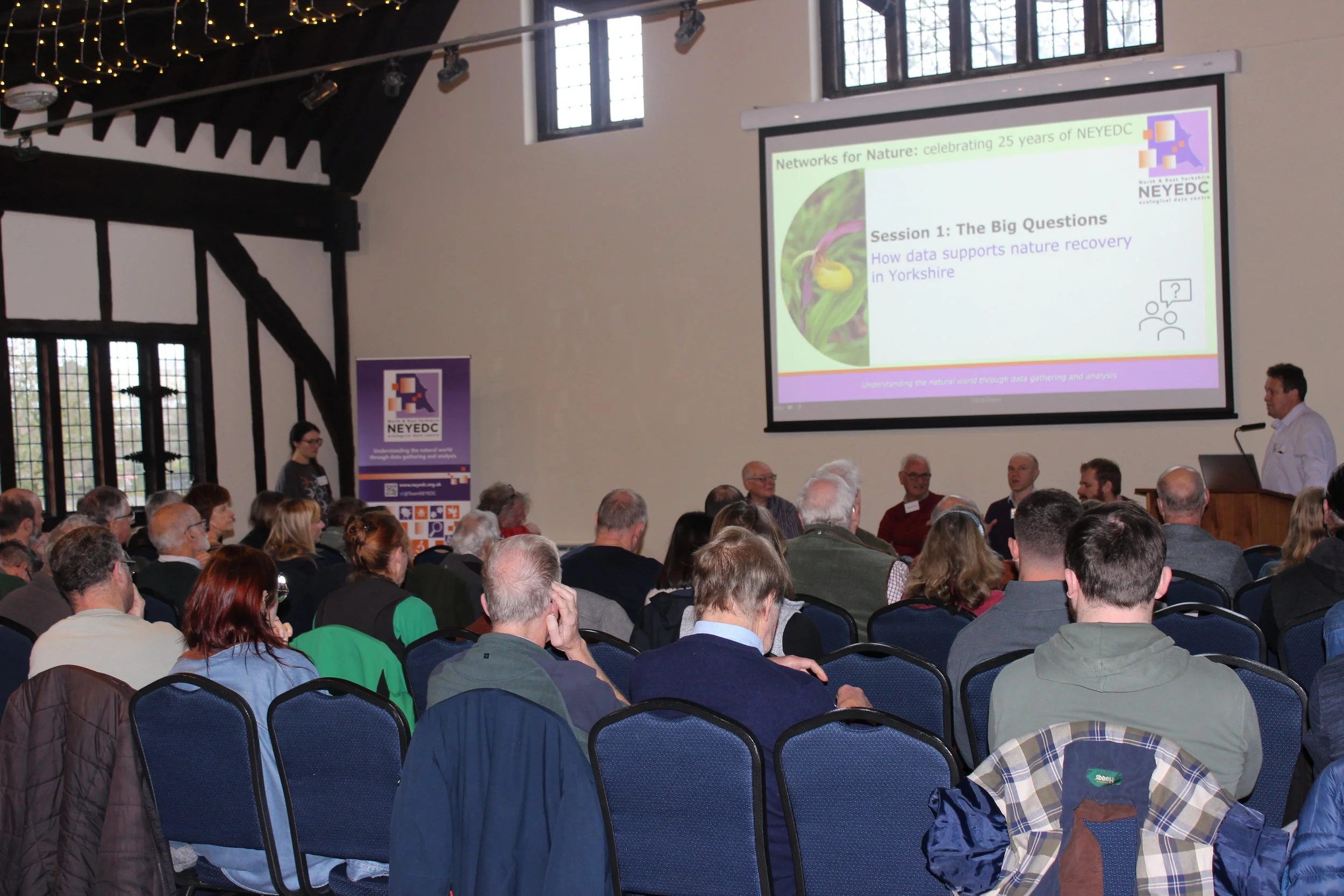
For our morning sessions, we were first treated to a keynote speech from our very own Yorkshire & Humber Ecological Data Trust Chairman Jeff Lunn, who has spent his career working all over Great Britain for nature conservation organisations, notably the Nature Conservancy Council and its successors. Given Jeff’s long history with YHEDT, NEYEDC’s overarching charitable trust, he was the perfect choice to deliver the keynote on ‘NEYEDC: the past, present, and future’. The talk highlighted the beginnings of NEYEDC in the early 2000s and the figures that were instrumental in recognising the need for, and putting the wheels in motion, for a North and East Yorkshire LERC. He also highlighted the parallels of the concerns and ambitions of 25 years ago – a recognition of the need for more quality ecological data to inform decision making, which led to the creation of NEYEDC – and the challenges and opportunities of the present day, where the development of the Local Nature Recovery Strategies has shown the need for more comprehensive and more readily available biological data to enable us to support nature recovery in the region, and how well-placed NEYEDC are to help facilitate that.
Jeff’s fantastic keynote transitioned perfectly into our second talk, where John Pemberton and Matt Millington, of East Riding of Yorkshire Council, talked us through the development of both LNRS (Local Nature Recovery Strategies) in our region, and how species have been interwoven into the primarily habitat-based strategy to complement interventions at the local level and highlight species important to our area. Taking us through a high-level look at the LNRS process, John and Matt explained how the species were chosen, going from an 8,000+ ‘long-list’ to a curated list of ~100 species for North Yorkshire and York and Hull and East Yorkshire combined, which was created based on collaborative workshops and consultation with our region’s most knowledgeable experts. A key message of this second talk was the availability of useable data – taking us from 11,000,000 potential records in the ‘data sphere’ to only approximately 1,100,000 that have the right license, resolution, age, and accessibility to actually be used to inform the strategy. For more information on the Hull and East Yorkshire Local Nature Partnership, see their website: www.heylnp.co.uk.
Our final talk of the morning was delivered by Alastair Fitter, emeritus professor at the University of York. Alastair’s talk followed on from the messages delivered by John and Matt but looked more closely at the lack of available records, which groups we have the least accessible data for, and how recorders feel we best approach strategic or targeted recording to fill those gaps. Alastair used mapping of the species richness of a variety of taxonomic groups or families to highlight how we can disentangle factors like recorder effort or the recording of alien species versus when mapping suggests a true reflection of that group’s distribution, such as linking increased richness with geological features.

Workshop groups ready to discuss!
After a morning break, our next session was a workshop led by our own Simon Pickles – ‘Building an Evidence Base for Nature’s Recovery’. In light of so many recent developments in terms of the LNRS its ongoing monitoring, Natural England’s NCEA (National Capital and Ecosystem Assessment), and the identification of recording gaps and data accessibility, Simon led a workshop where attendees were split into smaller groups to discuss two sets of questions. These were on the use of ‘citizen science’ (defined by Natural England as science conducted by the public under the supervision of a qualified scientist or expert) and whether citizen scientists could be used to meet the growing need for data, particularly related to LNRS monitoring, and the use of standardised survey methodologies and the benefits and challenges of that approach. We had some very active discussion all around the room, and it was great to see people from such a wide range of backgrounds and expertise come together to discuss these pertinent questions.
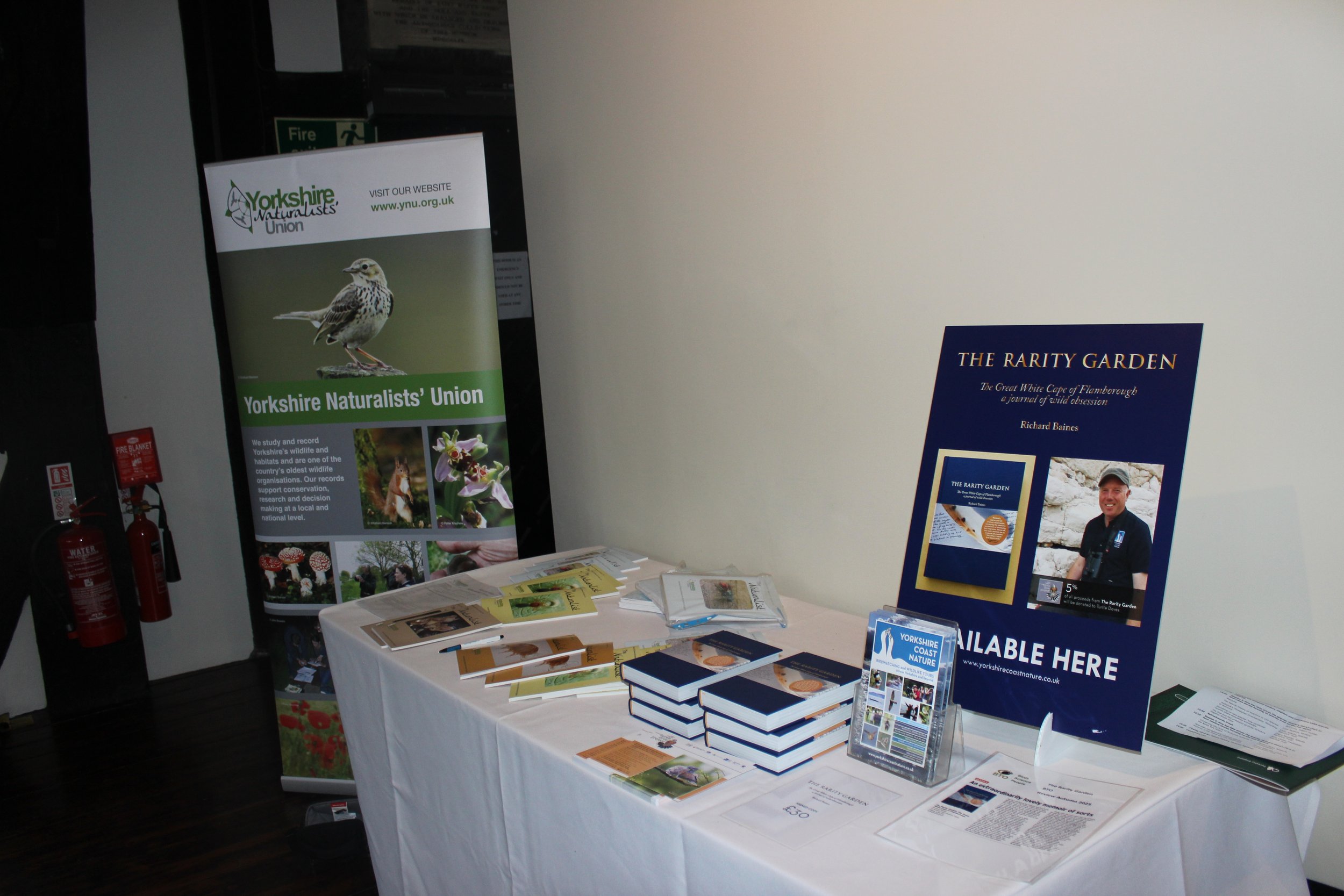
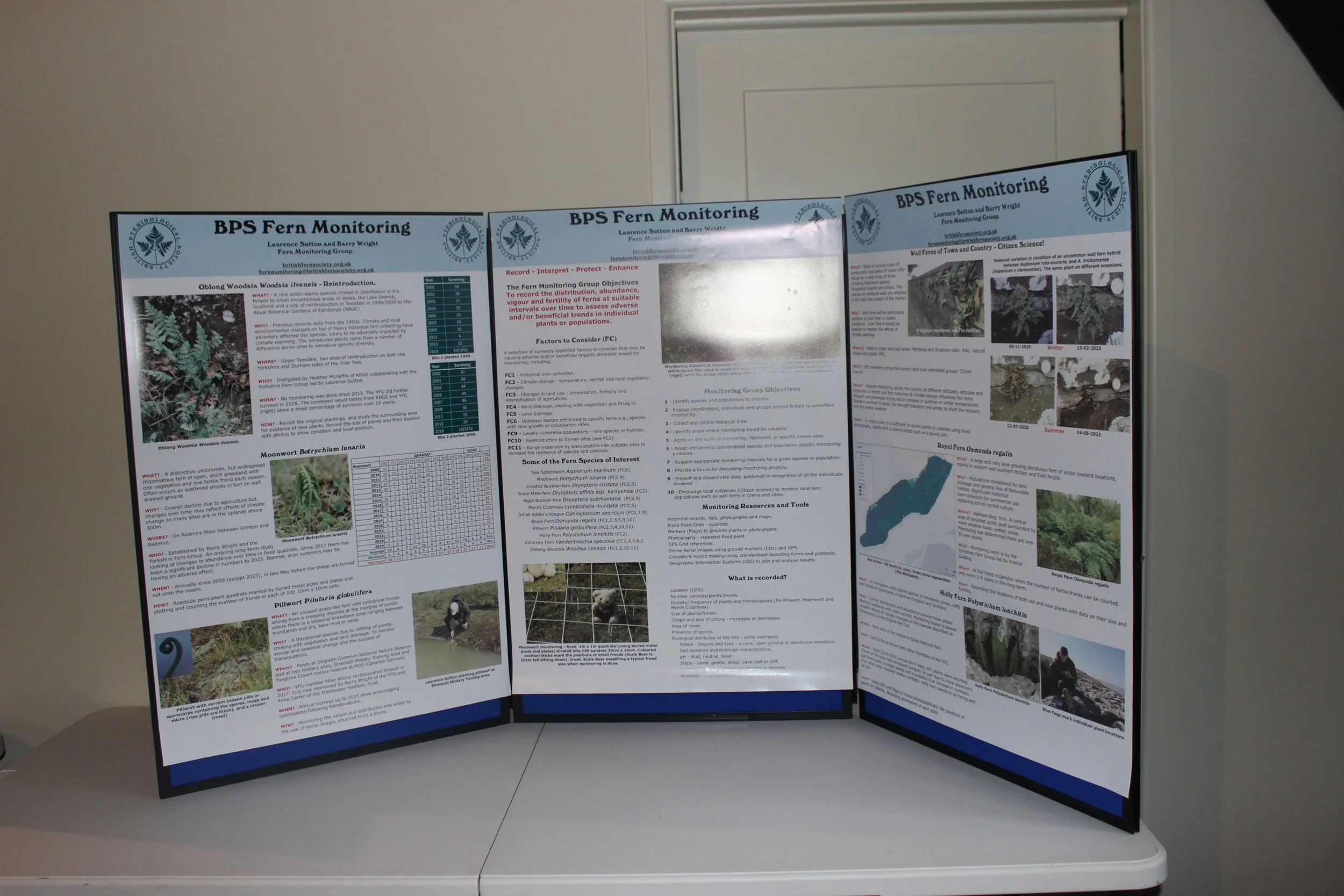
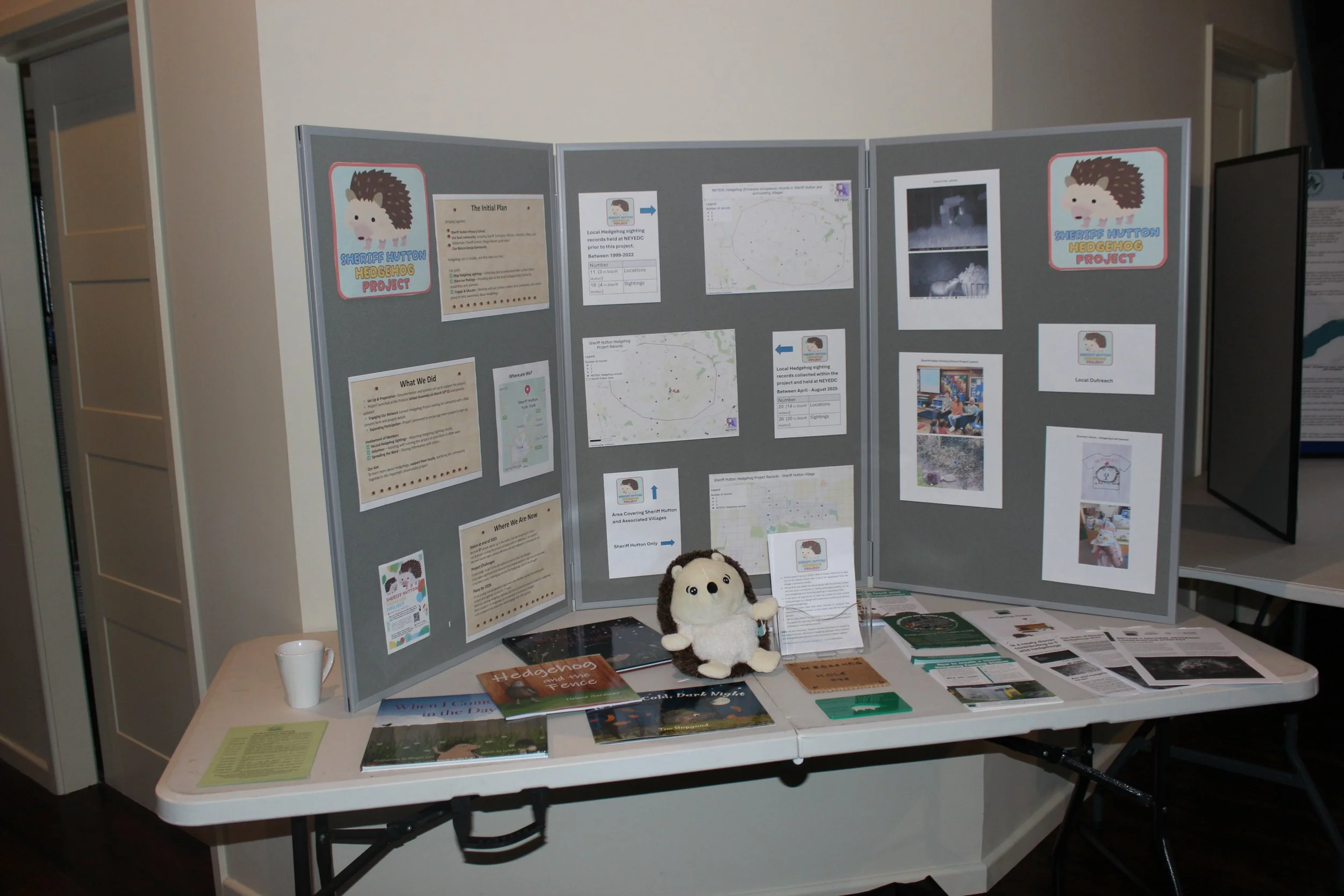
After a lunch filled with plenty of time for catching up, discussion, viewing of some LNRS species mapping, and revisiting our 100 Species blogs, our Chairman Jeff introduced our afternoon session, a focus on the ‘good news’ nature recovery stories from our region.
Just before the experts took to the lectern, our Ecological Information Officer Lucy took a short moment to thank ‘The Natural History of Yorkshire in 100 Species’ contributors, now that the project has drawn to a close (with instalment #100 being published next week!) after almost 4 years. Thank you again to all contributors for your incredible contributions to the project and your time, enthusiasm and expertise that made each blog a delight to read and share: www.neyedc.org.uk/100-species
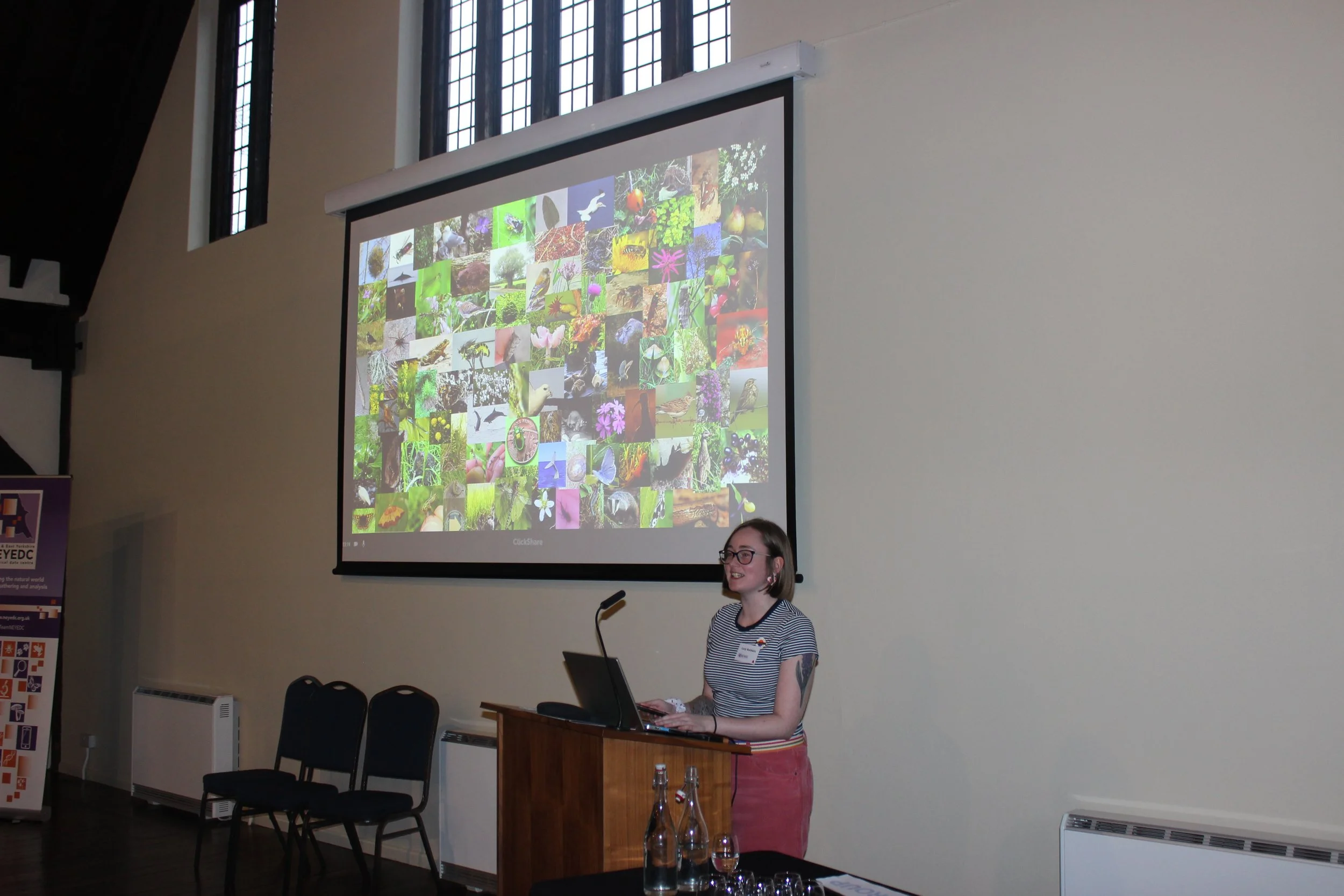
Lucy delivering a short segment on the 100 Species project - complete with slide showing all 100 species.
For our afternoon keynote talk we had Vicky Wilkins, of the Species Recovery Trust, share the ‘recording to recovery’ story of two of our most threatened invertebrate species – the iconic Tansy Beetle and the Tormentil Mining Bee. Vicky’s talk demonstrated the incredible work of their network of volunteers and experts in recording these species in order to better conserve them, including the ‘TBAG’ group (Tansy Beetle Action Group). TBAG have worked for over 10 years repeating volunteer-led, structured surveys along the River Ouse for this stunning beetle, which has led to a comprehensive dataset that has allowed for a Conservation Action Plan and other resources to be developed for the species.
Our own Claire Bending, also representing the Species Recovery Trust, was up next, delivering an encouraging and inspiring talk on ‘Stumbling on rare species’, and how spending more time outdoors – whether walking by a footpath, on a group recording outing, or when looking for something else entirely – can throw up amazing records of rare plants. Claire also shared the additional environmental and geological information she collects at sites, and how this in tandem with records of rare plants can tell us so much about their requirements and where we might find them next, which is integral for their conservation. We also got the chance to hear some stories about the surveying of Field Gentian and Dwarf Milkwort, Claire’s two main study species.
To finish off the first half of afternoon talks, Anne Carter at Freshwater Habitats Trust introduced us to Pillwort, one of their focus species, and its recovery across three sites in Yorkshire. Anne talked us through efforts to grow and translocate the species and brought us up to date with how it’s doing today, including sharing some very innovative drone-survey methods using blank CDs!
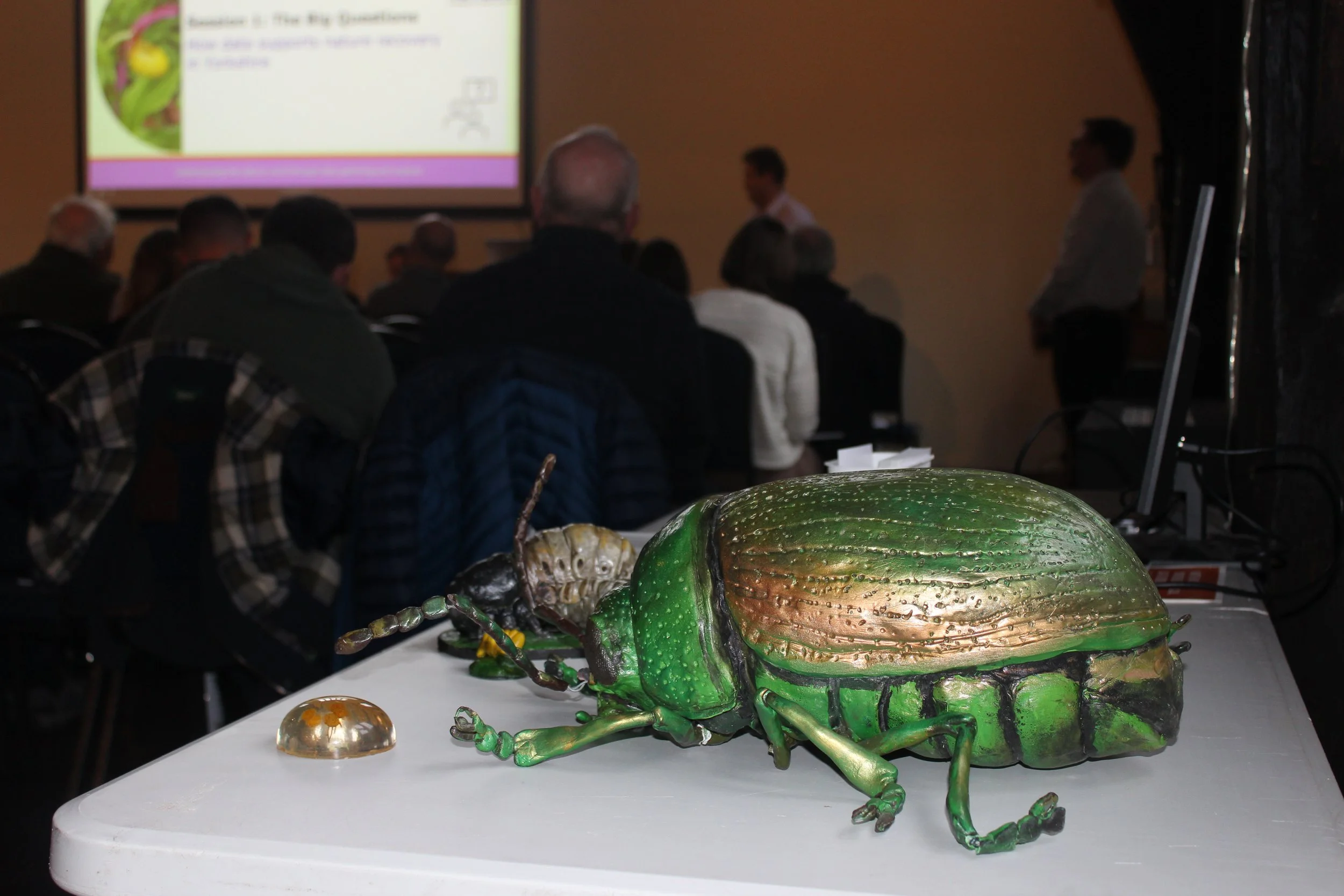
One of Species Recovery Trust’s most popular props of the day - a giant Tansy Beetle!
After a break, we had our last two talks of the afternoon. Robert Parks, of Butterfly Conservation Yorkshire, shared the story of the beautiful Duke of Burgundy, a rare species with only a handful of strongholds in the North York Moors. Through decades of work by Robert and other Butterfly Conservation volunteers, including systematic searches and reviewing historic records, new sites have been found for the species and existing sites are being monitored and managed with the butterfly in mind to ensure its ongoing survival.
To end our day, we were treated to an uplifting talk by Simon Warwick of the Lower Ure Conservation Trust on the restoration of wetland at Nosterfield Nature Reserve, which was until recently an active quarry. Simon shared how the team has used modern species recording, paleontological evidence, and geological information to discover which species are present at the reserve today, which would have been present at the site throughout history, and how the site could be adapted to work with its geological features. This included using local providence cuttings and samples of important native wetland species to grow new plants at their on-site nursery, ready to re-introduce into the reserve. We also learnt how LUCT is working more widely, such as trialling fen restoration, managing important road verges and on landscape-scale sites intertwined with heritage, such as Thornborough Henges. All decisions based on evidence and data!
The conference was an excellent opportunity for us all to catch up with colleagues old and new from across Yorkshire’s ecological network and talk about the big questions and challenges facing our sector – with a healthy dose of celebration and optimism thrown in! We would like to extend our thanks to all attendees and our brilliant speakers for making the day a success.
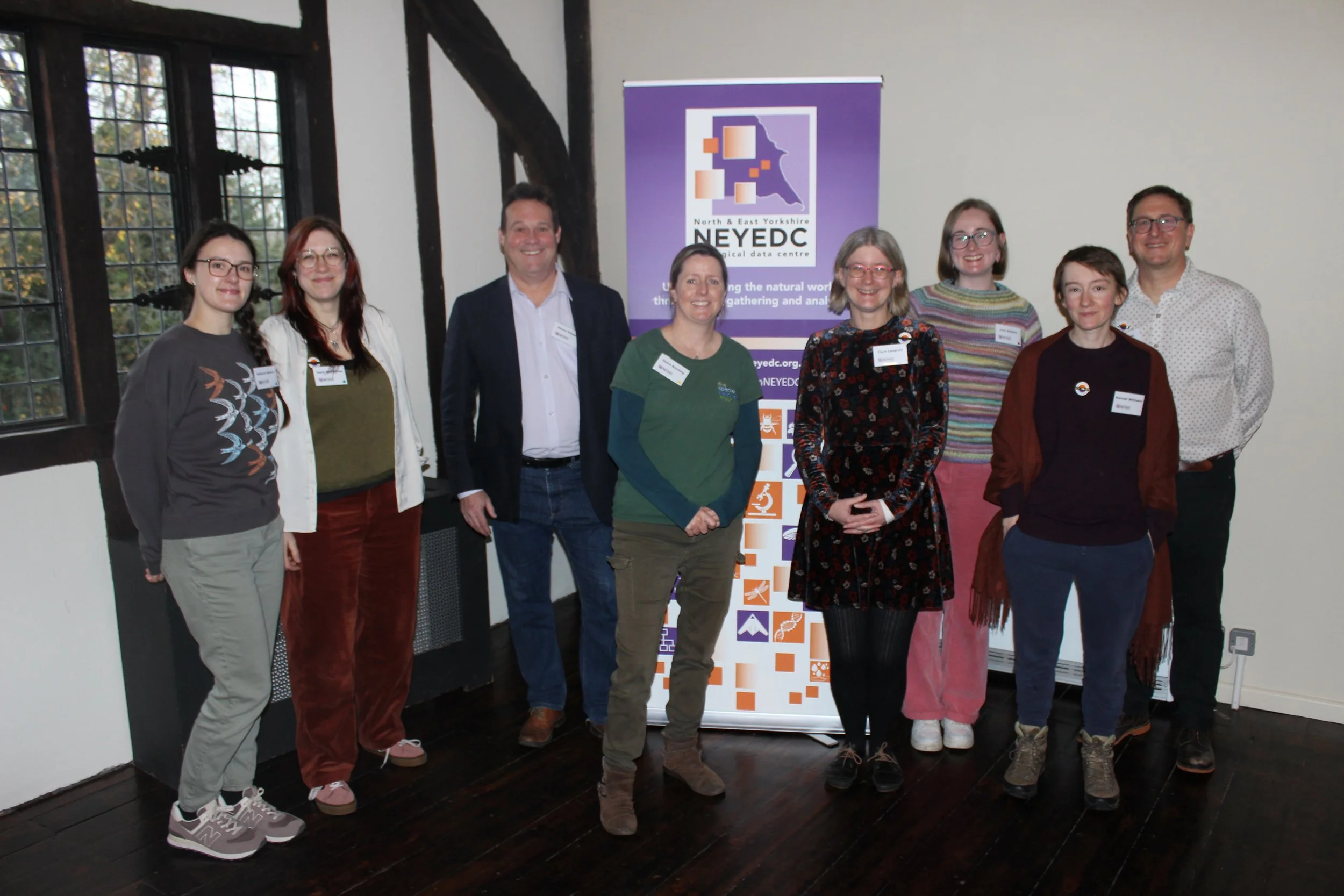
The full NEYEDC team - L to R: Rebecca Brown, Josie Monaghan, Simon Pickles, Claire Bending, Clare Langrick, Lucy Baldwin, Hannah Whitaker, Mark Wills.