
Updating the Ancient Woodland Inventory: Groundtruthing
Carrying on from our previous blogs, our Ecological Surveyor, Claire Bending, talks about the next steps in the process of updating the Ancient Woodland Inventory (AWI).
Our first AWI blog gave the background on the definition of ancient woodlands and how the long-established woodland (LEW) map layer was created. The following blog focused on our efforts digging through historical maps and references, looking to head back further in time and provide more evidence for the age of certain woodlands.
Now that the survey season is over, here we’ll introduce another important strand of evidence for identifying an ancient woodland; the on-the-ground surveys.
Survey Sleuth
Unfortunately, there is no quick way to look at a woodland and tell if it is ancient or not. Instead, we need to look at what clues we can find to indicate the previous use of the land. For this, we use the following checklist of features:
Ground flora species: misleading beauties
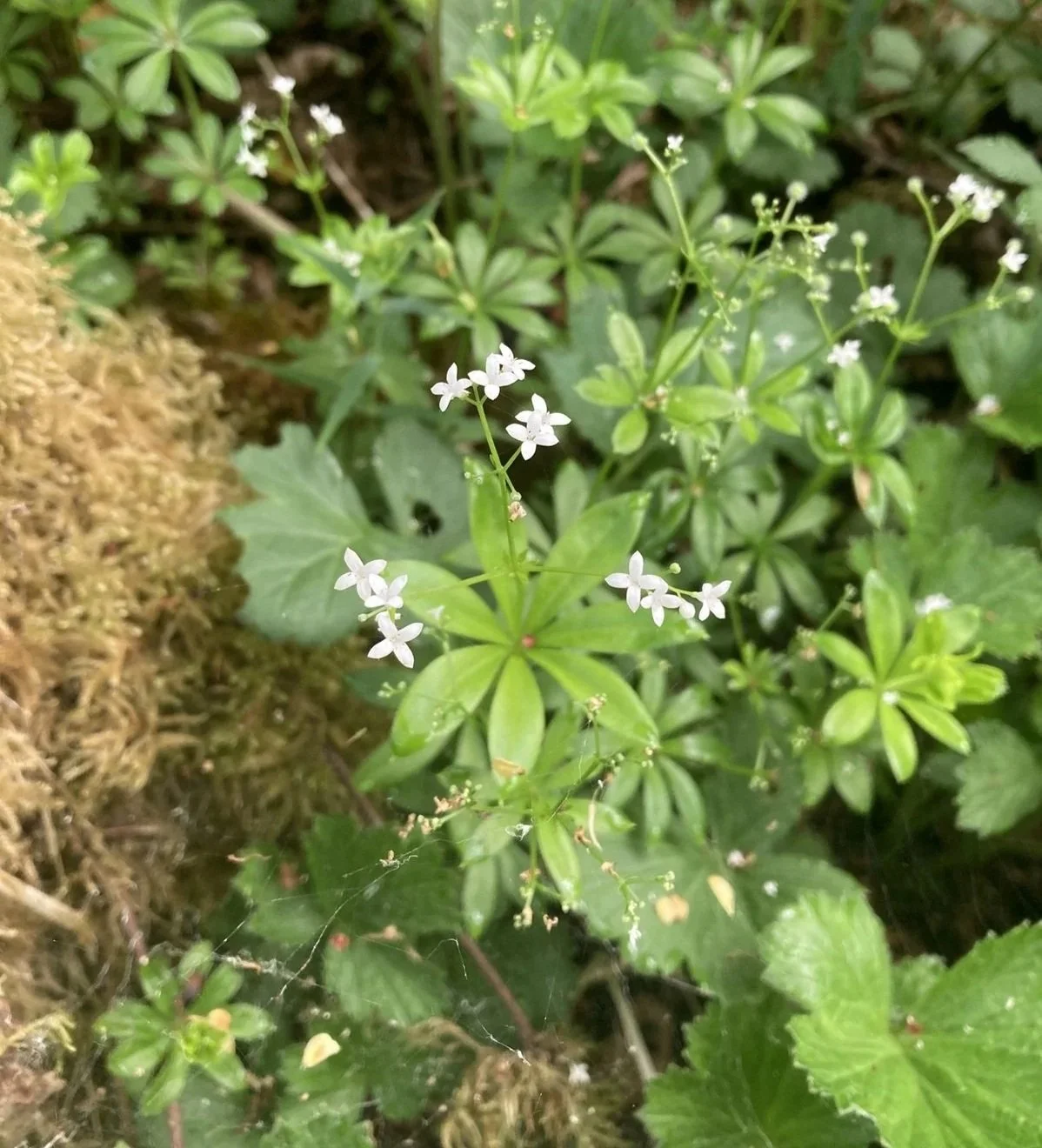
Sweet Woodruff by Dave Conniss, a woodland indicator plant.
This is the feature that is most often talked about in relation to ancient woodlands. We have a checklist of specific species, called Ancient Woodland Indicators, that we complete for each site we visit. The more species found at a site, the more likely a site is older. For example, a rich ground flora of species such as Bluebell, Sweet Woodruff, Sanicle and Wood Anemone can point to a long-established woodland floor.
However, this can be misleading. Woodland species can re-colonise relatively quickly (and remember, a three-hundred-year-old wood is still not classed as ancient), especially if there are adjacent woodlands or shaded road verges, which can often contain fragments of diverse woodland ground flora.
Ground disturbance and light levels can also influence the species seen, regardless of the age of the wood. Thinning a woodland (removing trees to make more space for the ones left) lets more light through to the ground, which can cause a flush of vegetation such as bramble that can swamp out many of the more delicate species and give the impression of species-poor ground flora.
So, having decided that ground flora – though important – can be misleading, what else can we look for?
Historical features: solid evidence
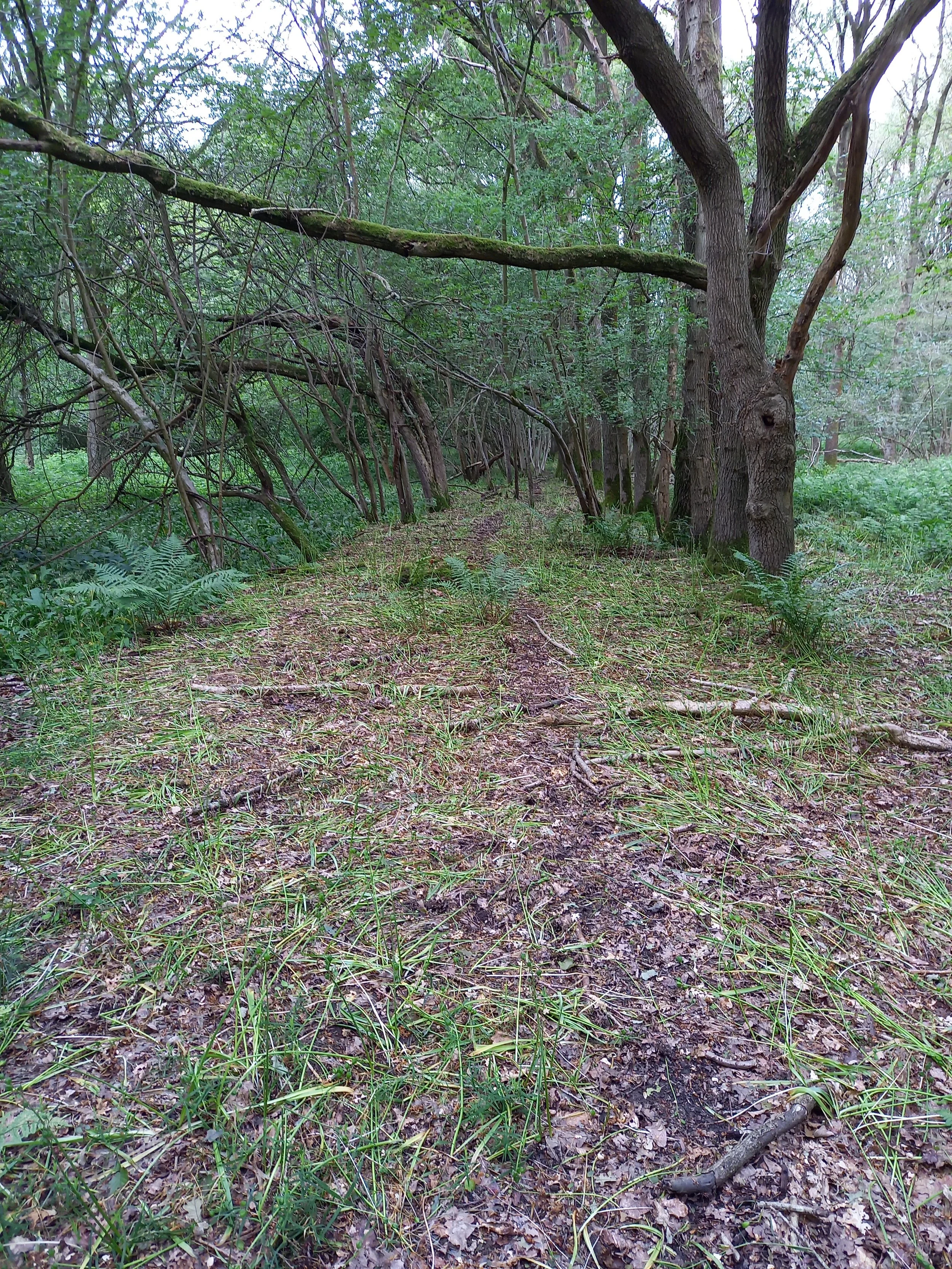
A wide bank running along a parish boundary
Lumps and bumps, on the other hand, can give some reliable evidence to the history of a woodland.
Substantial bank boundaries, especially irregular and curving ones, can denote parish boundaries but can also indicate early enclosure of woodland and the requirement to exclude livestock to protect trees for timber and coppice.
Extensive quarrying remains can suggest that there was a break in woodland timeline for another land use, as can evidence of limekilns. However, industrial remains can also indicate long term woodland use, for example bloomery hearths which needed a close supply of wood for charcoal.
Ancient trees: bridging the years
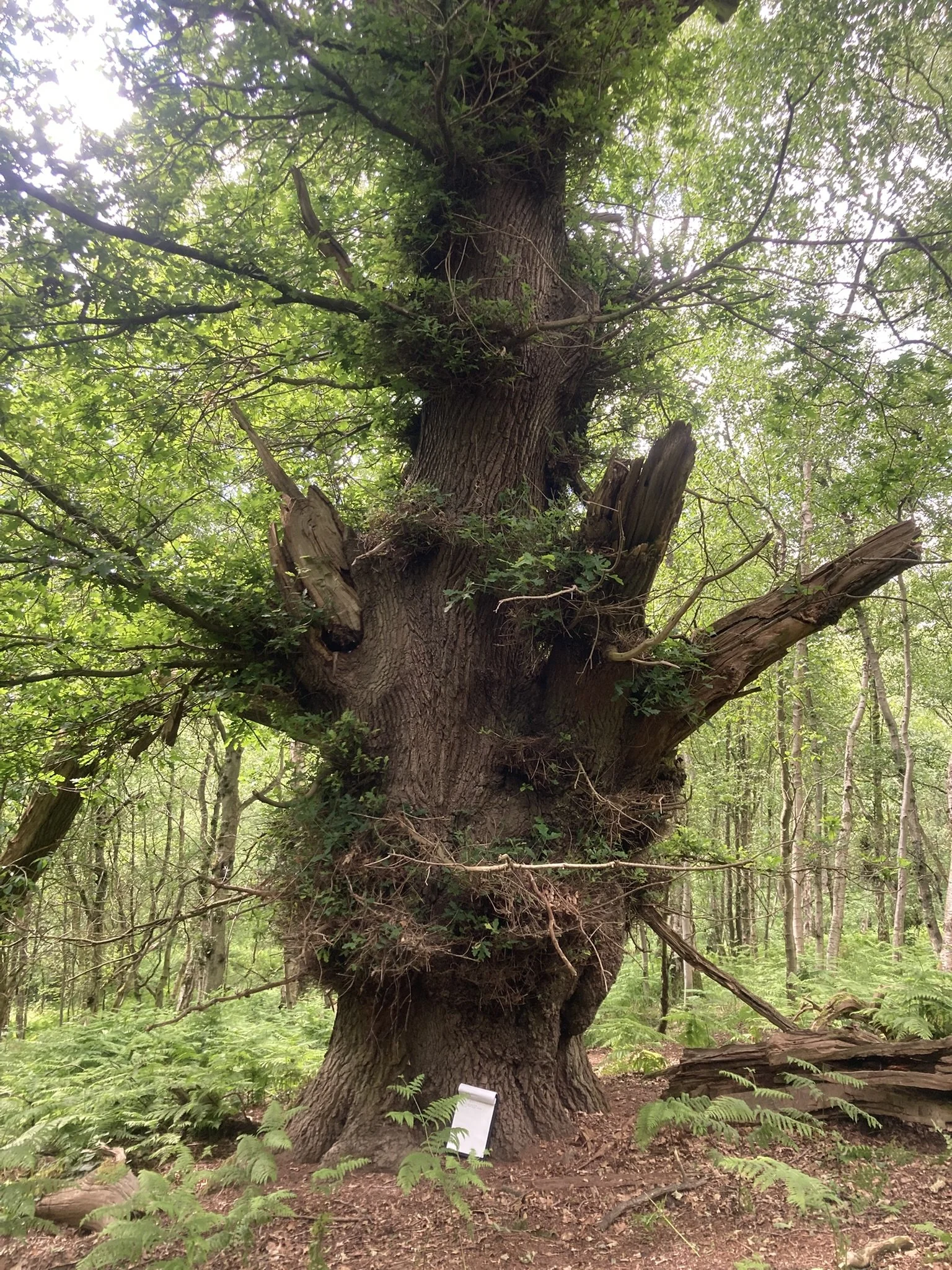
Ancient Oak by Claire Bending
It is easy to be distracted by the present woodland cover but once again, remember that we need to be looking back four hundred years! Most tree species unfortunately don’t survive this long, but the beautiful and rugged Oak can, and the presence of ancient Oak in a woodland is probably the easiest clue of all.
Some other trees can survive almost this long; Ash trees, especially if pollarded (branches regularly cut off at 6ft high), can live up to 350 years old and Field Maple for a similar length of time. Hazel does not survive as long, although well managed coppiced Hazel can last up to 200 years. The tradition of coppicing dates back thousands of years and was in strong demand for charcoal production and building and fencing materials. Therefore, finding old coppice stools can point to a long-standing use of the woodland.
Topography: uphill struggle
Although this is not a straightforward source of evidence, looking at how the immediate landscape could have been used can give clues. Breaks of slopes can potentially show old cultivation marks where workable land has been ploughed to before it became wooded. Steep, difficult to access valley sides were more likely to be left as woodland and blocks of woodland on flat land agricultural land, without evidence of historic ditches and boundaries are more likely to be of more recent origin.
Summing up the surveys
Ultimately, despite searching for as many clues as possible, for a lot of woodlands the on-the-ground evidence alone is inconclusive. Woodlands have faced many pressures– from the decline of industry and the associated need for timber products, the replacement of native woodlands with fast growing softwoods, clearance to provide more agricultural land and poor management such as overgrazing – which all change the fabric of woodlands and the landscape. That said, the observations of our keen-eyed surveyors are an important part of our data-gathering process and can really help us establish whether or not a woodland may be considered ancient.
In the final phase of the AWI Update Project, we will be using all the data we’ve gathered to decide which woodlands to include in our proposed amendments to the AWI. We will look at the ground survey evidence alongside our other sources – such as historical maps and documentary data, placename evidence, and other geographical clues – to build a picture for each woodland and work out whether there is enough evidence to suggest it may have survived since 1600 and therefore should be included on the updated AWI. Keep an eye out for a future post on this process, and some final numbers for ancient woodlands across North and East Yorkshire!