#100 Corncrake by Craig Ralston
Meet Craig Ralston, author and Senior Reserve Manager for the Lower Derwent Valley NNR!
Craig has worked in the Lower Derwent Valley NNR, laterally as Senior Reserve Manager, for over 30 years for Natural England, as well as covering several other NNRs in Yorkshire. Primarily a conservation land manager, Craig is also an enthusiastic researcher and birder on his local patch, using bird ringing as a conservation tool to help understand where best to put of efforts into conservation action in a landscape approach and also to make that data public facing and engaging. He is also a published author with two editions of the ‘Birds of the Lower Derwent Valley’.
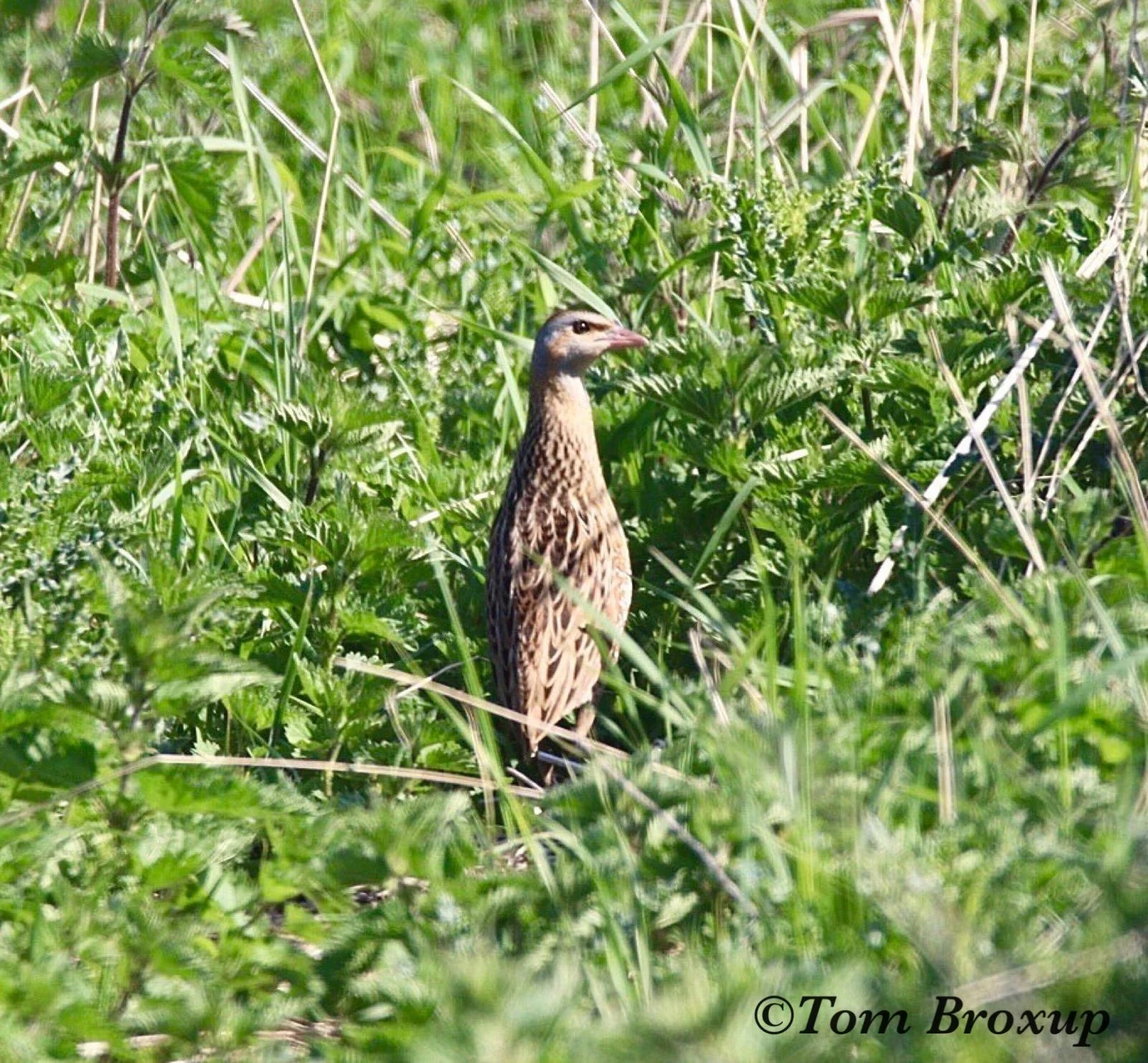
Craig’s chosen species is the elusive and enigmatic Corncrake Crex crex.
At the beginning of the 20th century Nelson (1911) considered the Corncrake in Yorkshire to be ‘common, except in manufacturing districts’ whilst Smith (1912) similarly noted they were ‘common summer visitors to the Derwent, often numerous’. However, it was evident a rapid decline took place thereafter, with numerous references in the annual reports at the time referring to a reduction in the number of these birds, cumulating in the comment ‘the remarkable scarcity of Landrails or Corncrakes, a species which has almost disappeared in this area’ in the 1933 York area bird report in The Naturalist. Chislett writing in 1952 further stated ‘they have all but disappeared as a breeding species in south and central Yorkshire’. He added ‘fewer corncrakes were noted during the year than Water Rails, which would have been impossible in my younger days’.
Following this wider and rather rapid decline throughout most of the county, at least in part linked to the intensification and mechanisation of agriculture, the loss and the earlier harvesting of hay meadows, Corncrakes unsurprisingly mirrored this wider trend in the wonderful hay meadows of the Lower Derwent Valley and had fallen to a low ebb and were on the verge of extinction in the area during the 1960s, with just two calling birds ‘throughout May’ in the Ellerton/Aughton Ings area in 1969.
The Corncrake is relatively short-lived with most adults seldom returning for more than one or two breeding seasons, and as such the population in any one year largely reflects breeding output the previous season. They tend to have two large broods, and with high natural mortality rates between years, the population depends on as many of the young fledging as possible to maintain numbers. Corncrakes are shy birds as most birdwatchers will testify, preferring to remain in dense cover and being very reluctant to break cover and move over open ground, especially during their relatively long fledging period. Anything that reduces breeding and fledging success (such as habitat loss, earlier/faster cutting and cutting from the edge of the fields in towards to the centre) can reduce the population quickly to unsustainable levels.
As a result, the involvement of conservation organisations in the Lower Derwent Valley, buying and managing land, the implementation of various designations and the provision of agri-environmental schemes and associated payments for sympathetic management appears to have thrown a life-line to the last remaining pairs from the mid-1970s. Hay cutting dates that had both crept forward to mid-June, and increased in speed, due to the development of larger and faster tractors, has now been reversed and delayed until early July. The species was recorded in 1976 and annually between 1980 and 1987 when Corncrakes almost certainly bred and few birdwatchers in the country, if not further afield, didn’t make the trip to the Lower Derwent Valley to enjoy hearing the singing males present on the site. One extremely obliging individual showed incredibly well as it often chose to sing on the steps of the old Tower Hide between 5th May and 5th July. Numbers continued in a similar vein of one or two calling males per year during the early 2000s, but in part recorded numbers may have reflected survey effort with a further step change taking place in 2009, when as many as 11 calling males were present throughout much of the breeding season, and breeding was confirmed once again. Further delayed hay cutting and Corncrake-friendly mowing was introduced within 250m around the calling sites to further help the species and increased productivity, but numbers have subsequently fluctuated between one or two, occasionally three calling males thereafter until another upturn in records.
During 2016 a total of seven calling males were located, followed by eight in 2017 and 11 in 2018. Once again birds drew good numbers of admiring visitors to hear them calling in front of the hides at North Duffield Carrs, with several lucky observers enjoying good views of one of the birds there as it bathed and showed well on the edge of the scrape there on 12th May. Once again breeding was confirmed with the presence of a juvenile at one of the key calling sites during August. It has been suggested that the increase between 2016 and 2019 may have been a result of birds over-shooting from the English reintroduction scheme on the Nene and Ouse Washes.
A case for re-introduction
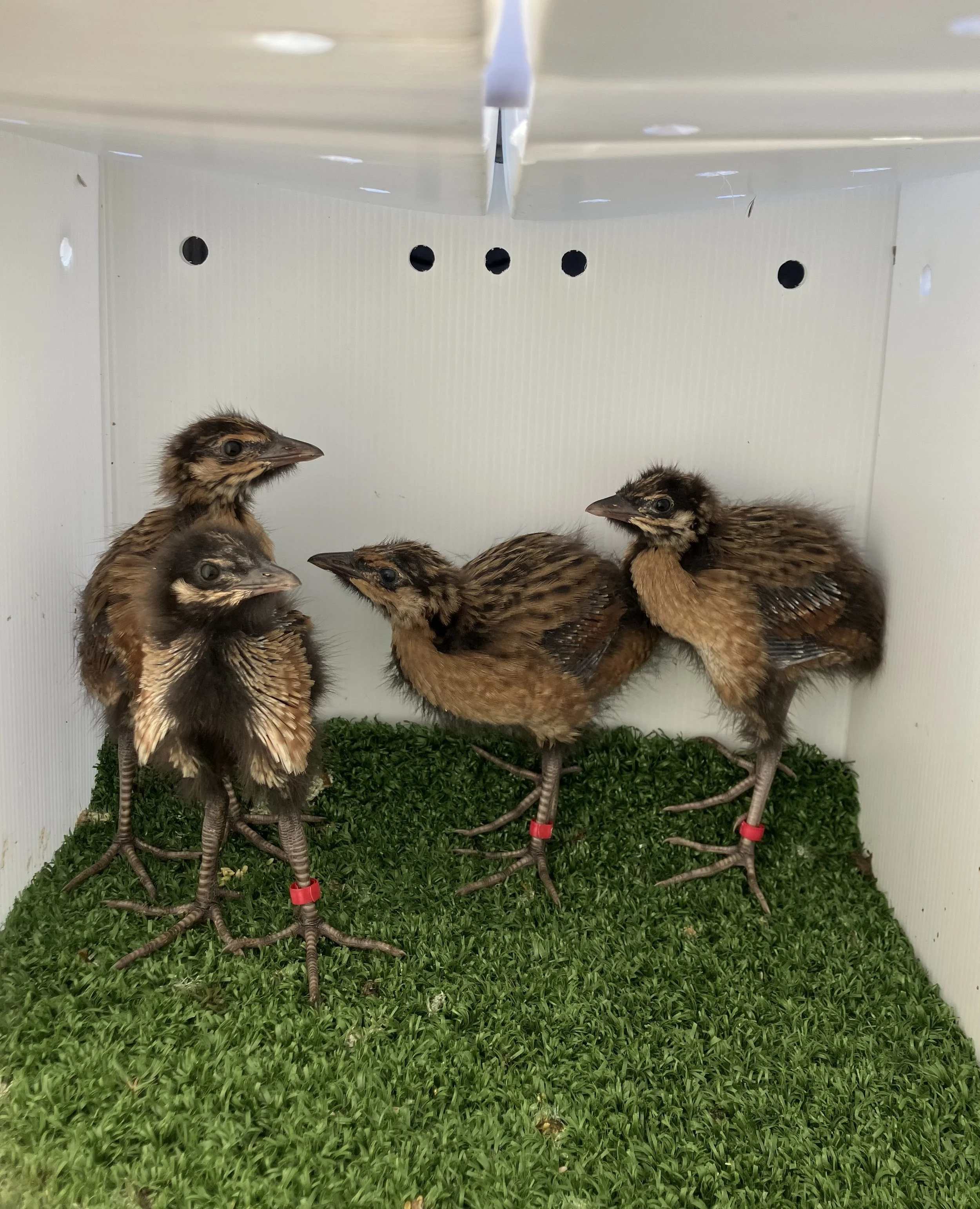
Following the withdrawal of RSPB and WWT from the English Corncrake reintroduction attempts on the Nene and Ouse washes, and elsewhere in Norfolk, The Friends of the Lower Derwent Valley and Carstairs Countryside Trust, with support from Natural England ‘rescued’ the project, bringing it back to the Lower Derwent Valley. Not only does the site contain ample habitat to support in excess of 100 calling males, but through close partnership working, the management required to support the birds can be put in place, and wild birds are already attracted to this site (only regular English site) and appear to, at least occasionally, breed here. Chicks, parent-reared by captive stock originally from the Scottish population, are brought to the reserve here at 14 days old, at which point the females would be leaving them to start a second brood naturally in the wild. The birds are held in pre-release pens until around 34-35 days old, during which time they fix on the night sky and fix the Lower Derwent Valley as ‘home’. The birds are then released and hopefully migrate to the wintering areas and return to within 2km of the release site the following year, albeit with just a wild natural return rate of around 20%.
A total of 74 chicks were successfully released during the summer of 2025 following ringing, DNA swabbing and a full veterinary health check. Several birds were fitted with radio-trackers and GPS and Motus tags, to help us collect robust post-release data on these individuals. This has been useful to helping us understand habitat use, post-release fledging and migration routes out of the county – with one bird monitored on the Motus network departing the reserve via Spurn and the north Norfolk coast. The project will continue for another three years with up to 100 chicks released each year, and the aim to establish a self-sustaining population of Corncrakes in the Lower Derwent Valley, boosted by wild birds and breeding. We’ll be monitoring the return of calling males to the site and will be asking local and visitors birdwatchers to report their records, but we would also be very interested to hear of any calling birds elsewhere in the county in the coming years. Hopefully, if all goes well, it would be fantastic to return the sound of the ‘crexing’ Corncrake back into the meadows across Yorkshire once again.
Recording and monitoring
The English Corncrake reintroduction team would be interested to hear of calling (or sightings of) birds across the county but are particularly keen to receive records from local and visiting birdwatchers and naturalists in the Lower Derwent Valley where reintroduction efforts have taken place. Records can also be submitted through the usual channels for birds (e.g. BTO, iRecord).
Further information and acknowledgements
NEYEDC would like to thank Craig for his time and expertise in helping to create this blog.