
Monad of the Month - TA2272 - Flamborough, East Yorkshire
Welcome to Monad of the Month! This series will feature a monad (1km) grid square within the North and East Yorkshire area where we’re lacking records in our database. We’ve chosen grid squares that lack records but also contain interesting or valuable habitats or (locally or nationally/internationally) designated sites, and that are close to large towns, cities, or transport links where possible, to make them accessible, should you wish to visit and do some recording!
Our Monad of the Month for March 2026 is TA2272, located on the East Yorkshire coast near Flamborough.
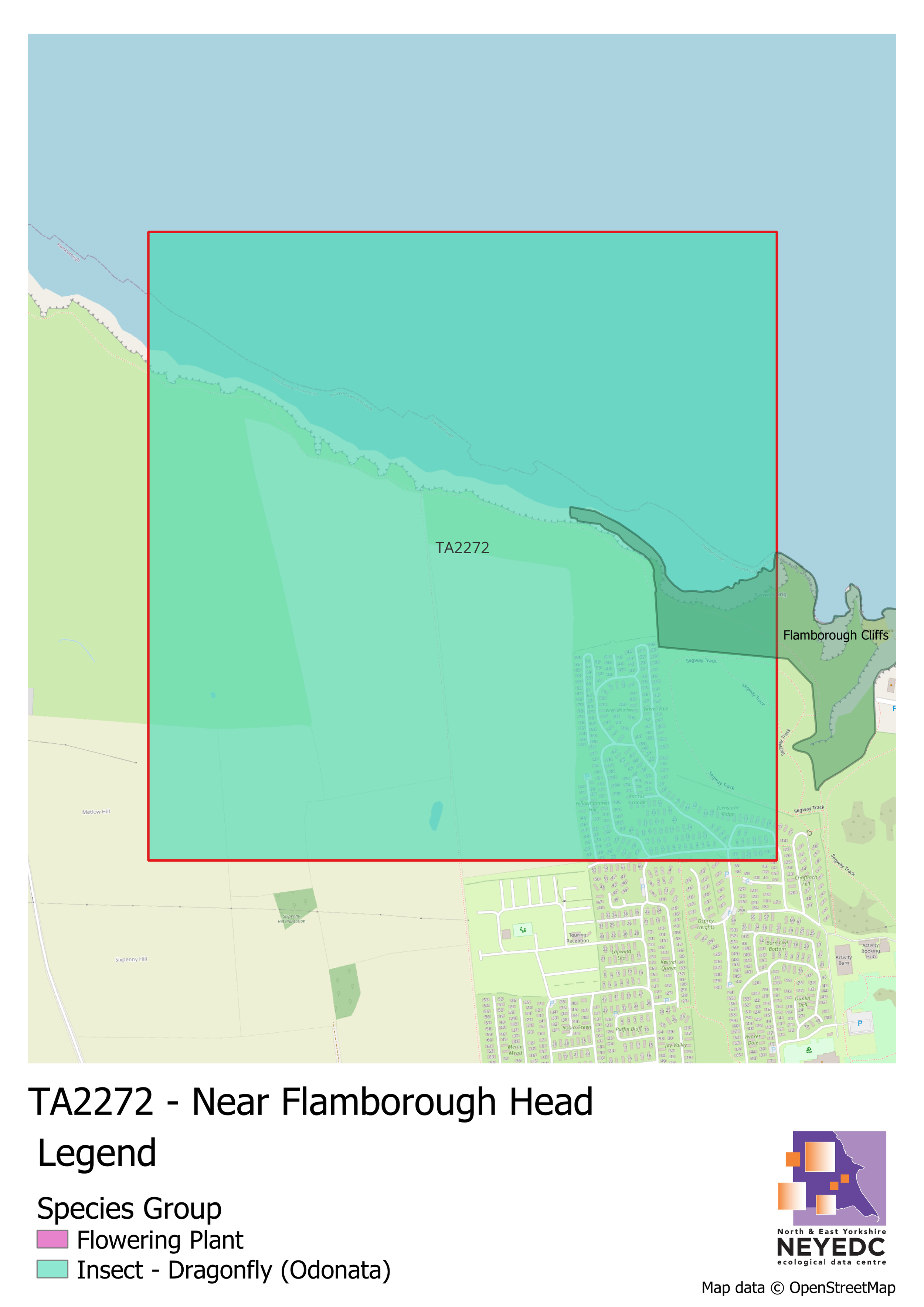
TA2272 is located close to Flamborough, East Yorkshire. Part of the Yorkshire Wildlife Trust Flamborough Cliffs Reserve lies within this grid square, as does arable farmland and part of the coastal path along the headland, which is a Public Right of Way. There is also another right of way that heads down from the coastline towards the village of Flamborough itself. Despite the general are being popular for recording, and the Flamborough Cliffs site being one of Europe’s most important seabird colonies, we only have two records in our database within this grid square…compared to 738 in the neighbouring one! There are some ~400 records on iNaturalist for the general area, most of which we cannot access due to licensing agreements. The two records represent one flowering plant and one insect. In fact, our record coverage is fairly sparse in the area between Flamborough Cliffs and Bempton Cliffs.
Whilst there are many sources of biological records, including on the likes of NBN Atlas and recording platforms like iRecord, as well as through organisations like BTO or BSBI, it should be noted that LERCs do not always have access to these records for local decision making, or cannot use them due to incorrect licensing, poor resolution, lack of verification, or other reasons. This series is intended to highlight areas where we have fewer records, forming gaps in our coverage. If you have records - particularly linked to specific sites or species groups - that we may not have access to, we’d love to hear from you!